

23 April 2026
To mark International Girls in ICT Day, partners of the YouTHink project convened an international online event titled “AI vs. Reality: Beauty, Ethics & Creativity”, engaging teenage girls from partners countries in a critical exploration of artificial intelligence, media literacy and digital creativity. The session, moderated by Christjan Mastnak from Simbioza organisation, brought together approximately 20 participants from multiple countries and ran for just over an hour.
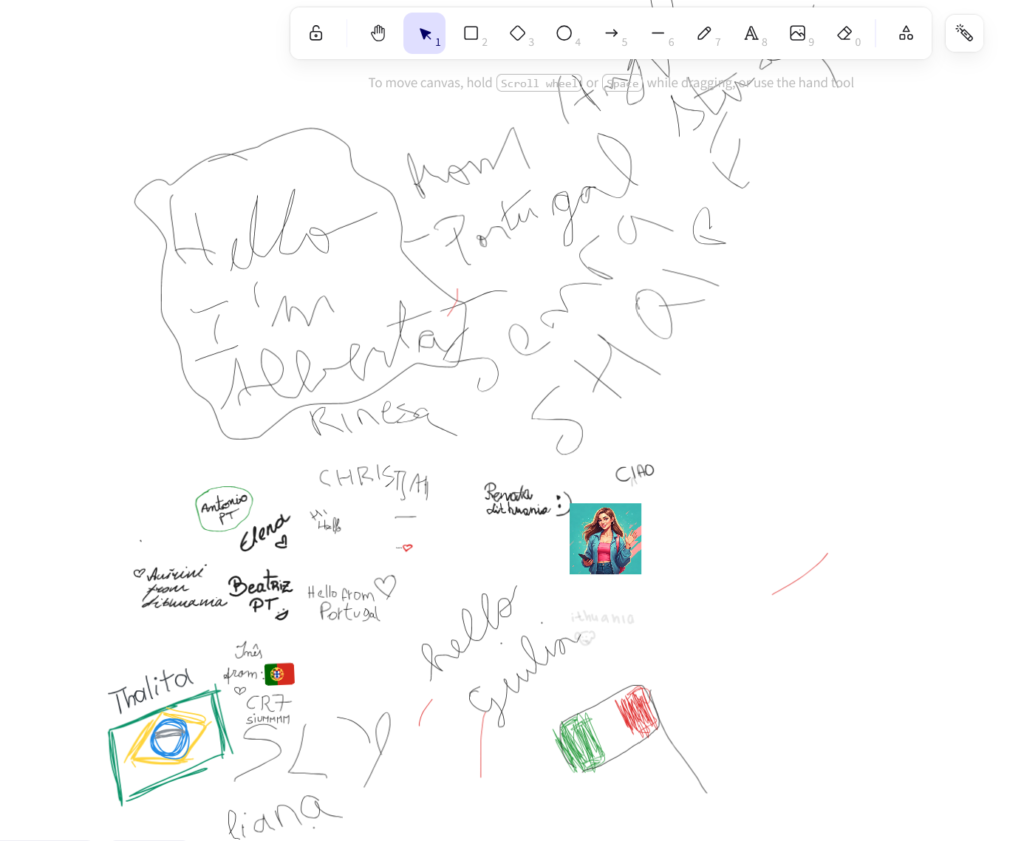
The event opened with an interactive icebreaker led by Laura Grinevičiūtė from VIPT, who invited participants to introduce themselves using the collaborative whiteboard tool Excalidraw. This initial activity fostered a sense of community and set the tone for a participatory and reflective session.
A key component of the programme was the introduction of the YouTHink project’s narrative framework. Renata Danielienė presented the project’s central characters — fictional yet relatable young individuals navigating contemporary digital challenges such as social media pressure, AI-generated content and online identity. A bespoke video created for the event introduced Ema, a central character who embodies the tension between curated online personas and authentic self-representation.
Presentation: Canva
The session then progressed into a technical and conceptual deep dive into artificial intelligence. Renata Danielienė from Information Technologies Institute delivered a focused presentation on prompt engineering, explaininghow input design directly influences AI-generated outputs. She highlighted the systemic bias inherent in generic prompts, which often produce idealised and homogenised representations of beauty. Participants were introduced to practical methodologies for constructing more precise and ethically use prompts, emphasising realism, diversity and contextual specificity.
Key technical recommendations included:
- Avoiding abstract descriptors such as “perfect” or “ideal”, which tend to trigger algorithmic bias towards unrealistic outputs.
- Recognising the importance of lexical sequencing, where word order affects semantic weighting in generative models.
- Applying a structured prompt framework: [Subject] + [Details] + [Setting/Location] + [Style], to guide AI systems towards more nuanced and context-aware image generation.
Illustrative examples demonstrated how detailed prompts incorporating natural features (e.g. skin texture, environmental context, clothing realism) and documentary-style parameters can yield more authentic visual representations.
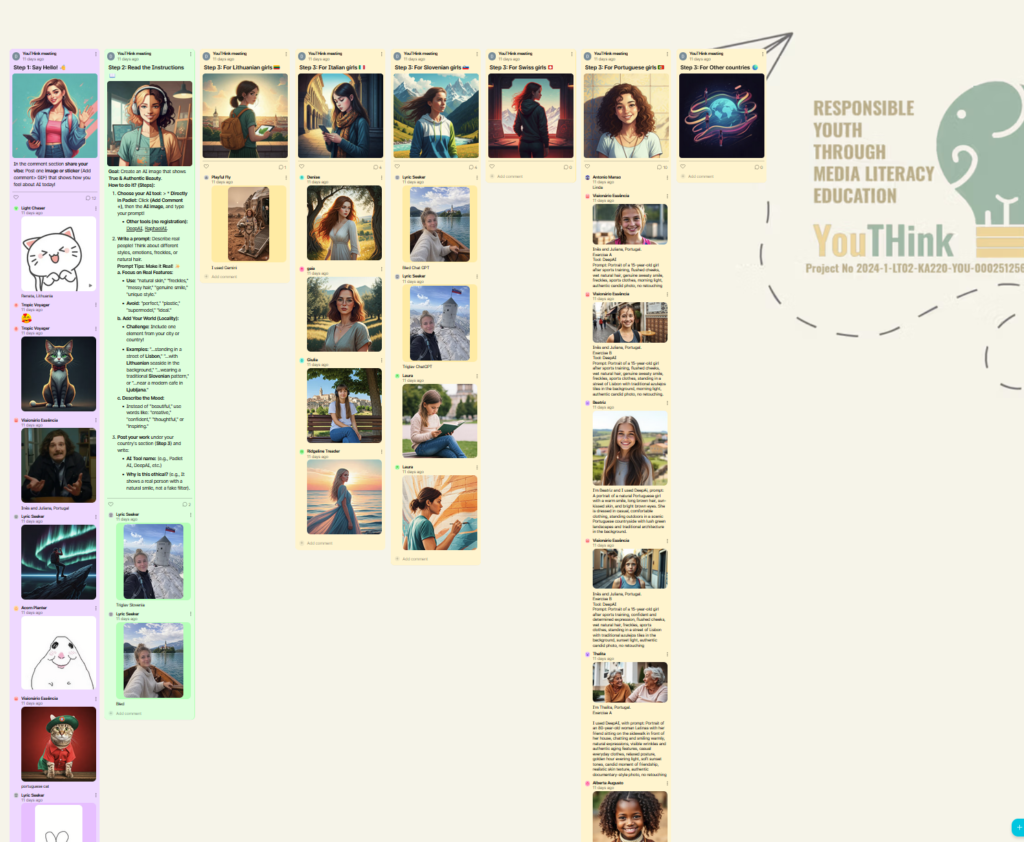
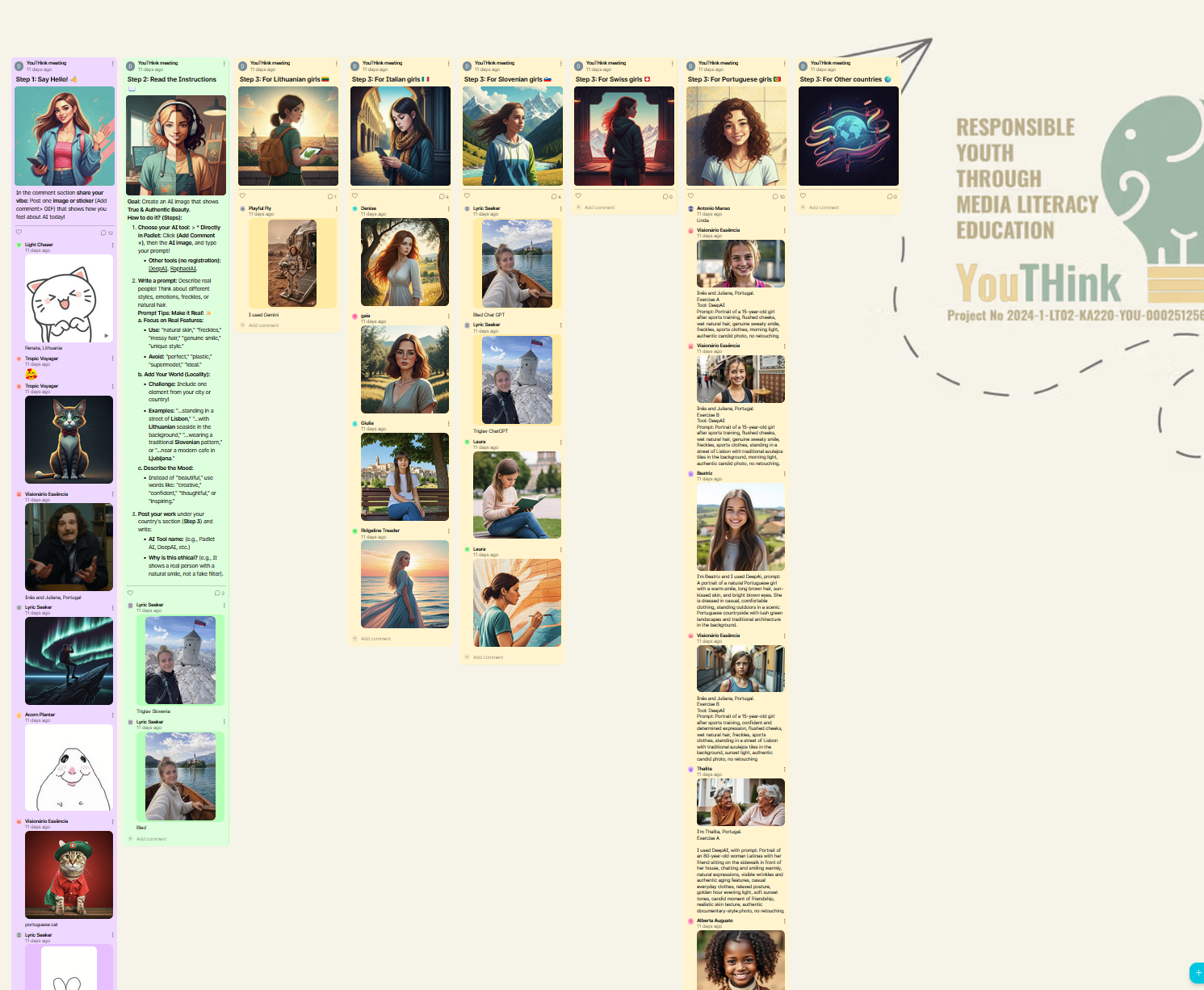
The practical component of the session was conducted via Padlet, where participants engaged in a guided creative exercise. They were tasked with generating AI images that reflect “true and authentic beauty”, using integrated or external AI tools such as DeepAI and RaphaelAI. The activity emphasised ethical considerations in AI usage, encouraging participants to:
- Depict realistic human features, including imperfections such as freckles or unstyled hair.
- Integrate local cultural or geographical elements into their prompts.
- Replace superficial descriptors with values-based attributes such as “confident”, “thoughtful” or “creative”.
Participants uploaded their outputs and reflected on the ethical dimensions of their creations, articulating how their images avoided artificial enhancement and promoted authenticity.
The event concluded with an interactive quiz on media literacy, delivered via Mentimeter and facilitated by Laura Grinevičiūtė. The quiz assessed participants’ understanding of key concepts discussed during the session, including the identification of manipulated content, the social impact of filters, and responsible AI use.
This initiative forms part of the broader YouTHink project—an international collaboration involving partners from Lithuania, Slovenia, Portugal, Italy and Switzerland. The project aims to enhance media literacy among young people through innovative storytelling and participatory learning. Central to its approach is the development of interactive narratives addressing topics such as filter culture (“The Perfect Profile”), deepfake technologies (“Deepfake Drama”), and influencer dynamics (“The Influencer Trap”).
By aligning the event with Girls in ICT Day, YouTHink partners underscored the importance of empowering young women not only as users of technology but as informed creators and critical thinkers. The session reinforced the notion that media literacy is a foundational competence in the digital age—enabling individuals to navigate, question and shape the increasingly complex landscape.