


A Report on Media and Information Literacy Education
The report “Promoting Media Literacy: Results from Creative Workshops and Surveys”, published in June by the international project consortium “YouTHink: Responsible Youth through Media Literacy Education”, presents an analysis of creative workshops and an online survey conducted between January and March in five European countries (Lithuania, Italy, Portugal, Slovenia, and Switzerland). The report states that media and information literacy (MIL) is a more urgent and important area of knowledge development than ever before.
Critical Thinking Gaps and Vulnerability to Disinformation
Although young people today tend to believe they can critically evaluate information online and on social media, their actual habits reveal gaps in critical thinking. The report states that 91% of respondents aged 14–19 tend to view information online critically and “sometimes” or “rarely” believe everything they see or read in the digital space. However, 53% of young people admit to “sometimes” believing what they see, and 29% rely on “common sense” when checking information, which is not always based on objective data and facts. Indeed, by being too self-confident, young people can be vulnerable and become victims of manipulation.
It is encouraging that 31% of respondents rely on multiple sources when verifying information, and 23% analyze the source of information. However, this is not a particularly high number of respondents. When asked about the biggest challenges in assessing source reliability, young people indicated that they still find it difficult to understand if a source is reliable (41%) and to distinguish opinion from fact (28%). It can be argued that these challenges would not be so relevant to a large portion of young people if their critical thinking skills were stronger.
Internet Browsing Habits and Risks
Another worrying phenomenon relates to youth internet browsing habits. More than half of the respondents, i.e., 58%, indicated that they spend more than 3 hours a day online. The most popular platforms browsed are YouTube (21%), Instagram (20%), TikTok (18%), and Snapchat (14%). Analyzing how young people get information about world events shows that social networks are not just a communication platform but the main source of information for youth. 35% of respondents receive information from social networks and only 21% from parents. These facts raise some concerns. Although social networking platforms fight disinformation and remove misleading information being spread, the risk for youth to encounter fake news or fall into echo chambers remains real.
Media Literacy Challenges
Summarizing the discussions held during the creative workshops, the report highlights a deepening crisis of trust in information sources, the devaluation of expertise, and emphasizes the lack of personal responsibility and value-based attitudes in the digital space. The report mentions changed reading and writing habits, the fading concept of authorship, and superficial consumption of information. The report also criticizes current media literacy education, which is often limited to technical skills and does not foster a holistic understanding of the media ecosystem and its functioning. Finally, the report draws attention to the blurring line between the virtual and physical worlds and the loss of discussion culture among youth, which poses new challenges for media literacy education.
Dangers Posed by Artificial Intelligence to Critical Thinking
The report emphasizes that today, Artificial Intelligence (AI) technology is changing the rules of the game across the entire information field. There is also concern that young people do not know enough about the dangers posed by AI, i.e., disinformation spread with the help of this technology, fake news, deepfakes being created, echo chambers created by algorithms on social networks, etc. However, despite the expressed anxiety, discussion participants understand that AI is an integral part of the modern world, so the most important thing is not to avoid it, but to develop youth’s ability to critically use artificial intelligence tools and the content created.
How to Develop Media and Information Literacy Skills and Critical Thinking?
Answering the question of what to do is not easy, but the report concludes that teaching only individual tools or skills is not enough today – a general understanding of how media works is necessary. This means that a young person must be able to understand the entire information chain: how a message is formed, what its source is, what its technical and social environment is, whom it serves, and what impact it has. Young people must not only know how to communicate but also learn to be individuals, not part of a mass that is easy to influence. It is noted that MIL topics often seem “boring,” “too far from youth reality”, so it is necessary to search for forms that would be relevant, understandable, and engaging for youth.
About the Creative Workshops and Survey
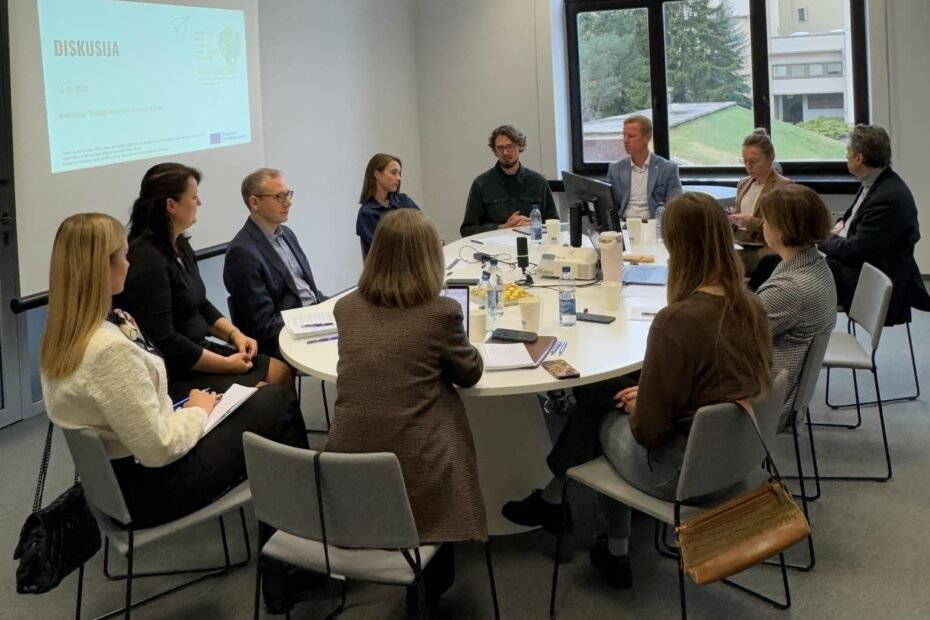
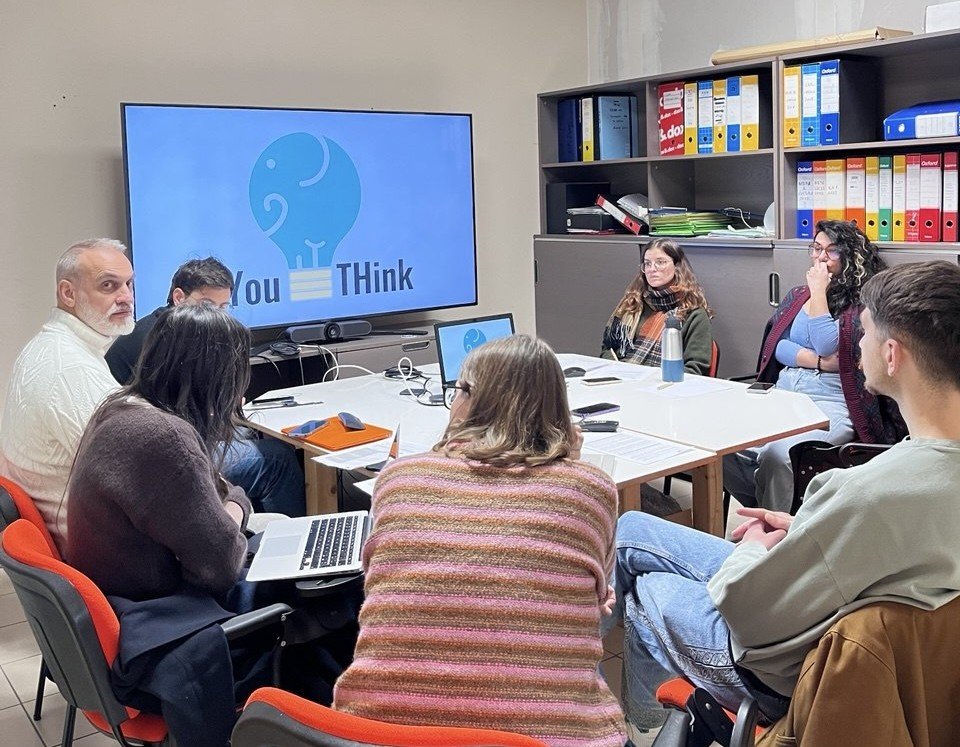
This report was prepared based on the analysis of creative workshops and a survey conducted in five European countries (Lithuania, Italy, Portugal, Slovenia, and Switzerland) from January to March. 40 specialists from various fields working with youth, creating training programs, and participating in the media and information literacy education process were invited to the creative discussions. During the discussions, participants shared thoughts on the most relevant trends and challenges in media and information literacy. They discussed youth expectations and needs in this context, also examined the influence of artificial intelligence on critical thinking, and clarified which innovative methods and tools are best suited for developing youth media literacy. During the youth survey, using a remote questionnaire, more than 200 respondents aged 14-19 from the aforementioned countries were surveyed. The anonymous survey consisted of questions aimed at finding out youth internet browsing habits, information verification methods, and the challenges they face when evaluating information in the virtual space.
The report in English can be found at: https://youthink.itinstitutas.lt/wp-content/uploads/2025/06/WP2.4.Based_on_CWs_results_Report_prepared_in_EN.pdf